 Artificially generated
Who the Heaven is Bilawal Sidhu
Google Earth plus Palantir, in your browser, with your data sources.
Bilawal Sidhu spent six years building Google Maps in 3D. In February 2026 he spends a weekend gluing live aircraft, ships, satellites and public cameras onto the same globe. People say he vibe-coded Palantir. A Palantir co-founder answers: he is missing real data fusion. Then the Iran strikes fly, and Sidhu reconstructs them in 4D from the couch. Late August he puts the code on GitHub. 14,152 stars in a week. On 31 August the level gets a name: World Browser, the base layer the next generation of apps will sit on.
Watch the globe before you read us on the man.
Below, the open-source video, 24 August 2026: We Got Open Source Palantir Before GTA 6. Under that, the Iran reconstruction, 1.9 million views. Code: github.com/bilawalsidhu/gods-eye-view. X: @bilawalsidhu. Newsletter: Map the World.
What he says on YouTube is self-disclosure. The GitHub stars, the layer list, the licenses stand on their own in the repo. The reading that this globe is a civilization-level map is ours. It sits in chapter 06, as a thesis, not a measurement.
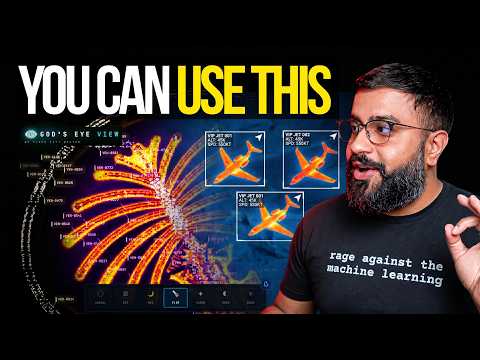
YouTube, 9:59. The walkthrough of the repo. MIT, Cesium, Google 3D Tiles, voice, layers. YouTube.
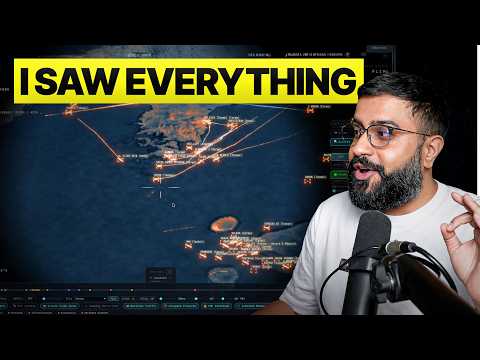
YouTube, 11:07, about 1.9 million views. Operation Epic Fury from public signals, minute by minute on the globe. Essay: The Intelligence Monopoly Is Over, 4 March 2026.

Spatial intelligence. World models. Visual effects. Creator w/ 2.1M+ audience. Tech Curator @ TED. A16z Scout. Ex-Google PM (AR/VR & 3D Maps).
Profile on XAlso: TED 2023 · TED on YouTube · Vibe Coded Palantir, February 2026 · bilawal.ai.
His paradise is a globe you can fork.
Not the view from above as power. The view from above as a commons. Sidhu helped build the photoreal Earth at Google that billionaires and states already had. God's Eye View takes the same sphere and lets you lay aircraft, ships, satellites, fires, traffic, radio and public cameras on it. Then the sentence that carries the heaven, in the README, not as marketing: every layer is a pattern you can point at your own data sources.
That is better than Palantir for everyone, because it is not a product behind an NDA. It is customizable. You bring the layers your town, your firm, your war, your climate needs. The globe stays the base. The data is yours.
CGI at eleven, Deloitte at twenty, the planet as a product at thirty.
Bilawal Sidhu, Austin. High school at Oregon Episcopal School, Portland. Bachelor, University of Southern California. yespress.io and The Org carry those stations. Year of birth is in none of the primary sources we have, so it is absent here.
The spark he tells himself: a Discovery Kids episode on the VFX of Independence Day, a new PC, 3ds Max. Then Deloitte Digital, analyst and consultant, 2014 to 2016. Google from 2017, six years, Senior Product Manager. Immersive View, ARCore Geospatial API, YouTube VR Capture. Exit late March 2023. TED talk August 2023. From December 2023, Technology Curator and host. a16z scout from February 2024. Creator with figures between 1.6 and 2.1 million audience, depending on which bio you catch. Newsletter Map the World.
He did not invent the sphere. He learned how to fill it.
Immersive View: Street View, aerial and 3D mesh as one look you spin on a phone. Geospatial API: the phone knows not only where, but which way it faces, sub-meter, in more than 100 countries, Sidhu at Google I/O. YouTube VR Capture: camera systems, not only a player. Those are the years without which the weekend globe is a skin with no Earth. The 3D tiles God's Eye View runs on are Google's planet. He helped build them, and he now rents them back with an API key.
After Google: TED mainstage 2023, six minutes of imagination and AI. Then the other side of the stage, curator, co-host with Chris Anderson, TED AI Show, conversations with Helen Toner, Eric Schmidt. a16z scout, angel in Pika, Hedra, Convai, Backbone. Documentary The Untold Story of Google Earth, July 2025: from an $800-a-year spy tool in 2003 to a public mirror. halfpixel.ai is what he flags for the expensive part: not the present on the sphere, the past.
It looks like a forbidden console. That is the joke, and that is the risk.
FLIR, night vision, military HUD, detection boxes over everything. Sidhu says the aesthetics are meant to feel like a spy thriller. The data is public. The gesture is military. Projecting CCTV from Austin, Caltrans and London into the 3D city is not a private Stasi net. It makes more visible what the cities already stream. The difference is fusion: camera, traffic, aircraft, fire, one click.
That is not Palantir. Sidhu quotes the co-founder: he is missing real proprietary data fusion. Fair, he writes. Reports name Joe Lonsdale on TBPN: low-end SaaS should worry, a billion in infrastructure should not. OpenSky, the flight layer, is non-commercial. Google tiles are metered. TeleGeography cables are NonCommercial. The repo says all of that out loud. Anyone selling the globe as a weapon is not reading the README.
The Iran pieces are the other shadow. A man on a couch reconstructs strikes, satellite passes, airspace shutdowns. That is journalism with a better map, and it is war entertainment in 4D. Sidhu draws a line in the repo: no named-person search, no faces, no individuals as a query. "People are not a query type here." The line exists because the temptation sits in the product.
WorldView in a weekend. Iran in 4D. Then the code, because people asked.
Fig. Schema, not a screenshot. The sphere is Google Photorealistic 3D Tiles. The rings are layers you toggle or replace.
In February 2026 the thing is called WorldView. Sidhu: three days, agents in parallel, Gemini and Claude. Live satellites, military ADS-B, CCTV on 3D geometry, seismic, traffic, CRT/NVG/FLIR. "Google Earth and Palantir had a baby." A week later the Iran strikes. WhatsApp to the agent: record everything before caches die. KH-11, TOPAZ, BARS-M, Gaofen, Maxar, Airbus, Capella, ICEYE over the same zones, before and after. Sidhu: The intelligence monopoly is over.
August 2026 the name God's Eye View, MIT, vanilla JS, Cesium, Vite. Thirteen live layers, ten with no key. Cockpit inside a tracked aircraft. Voice: take me to LAX, outline Texas, how many flights over Texas. 28 tools. Share links serialize camera, style, layers, one target. Firmatic cloned the repo two days after release: 2,601 tests green, 7,427 aircraft over OpenSky anon in one snapshot.
README: the architecture does not end at the bundled feeds. Every layer is a pattern. Issue or PR. City pack, sensor, style, voice tool. That is the Palantir difference that counts: you own the client.
Not a dot on a country outline. Flight paths, satellite passes, GPS interference, ships, cameras. Google News RSS and GDELT in the cockpit, with license caveats. The Iran film is the proof that public signals can carry a broadcast if the map holds them.
Sidhu: build in this space a week and you learn that now is the cheap part. Scrubbing what changed, at real resolution, gets expensive. That is halfpixel.ai. The open-source sphere is the live layer. History stays another product.
Google Maps tiles required, 1,000 sessions a month free on the cited US price list, then metered. Voice is OpenAI, $5 session cap in the app. AIS, FIRMS, TomTom optional. Ten layers: zero dollars, no account.
Maps like this belonged to services and armies. Now the base is public, and anyone can build their own globe.
This is our thesis, bound to Sidhu's work, not titled by him. In 2003 EarthViewer costs about $800 a year, Sidhu tells that in his Google Earth documentary, a spy look at a war. In 2005 Google gifts the mirror. Militaries and intelligence services have since got faster, denser, more current versions: their own constellations, SAR, tasking in hours. Everyday people got the beautiful planet, rarely the fusion. Tab after tab, Flightradar, MarineTraffic, USGS, a newscast with a red dot.
God's Eye View is the step after that, still rough, still with someone else's planet under the mesh, still with licenses that ban commerce. Even so: a photoreal globe in the browser, live layers, voice, an MIT client, your own sources plugged in. That was unreachable for anyone without a situation room. Now the base is here. Newsrooms, cities, researchers, firms, hobby OSINT can lay their world on it.
On 31 August 2026, 11:42, John McGrinsey gives the level the name it does not yet have in public. Not a toy globe after Google Earth. The World Browser. The Reality Browser. The new base layer the next generation of apps will sit on. Mobile app dead, replaced by the personal agent. Web browser dead, replaced by the world browser. God's Eye View as both in one stack. The four sentences that then converge: Software is eating the world. Globes are eating the world. World models are eating the world. Games are eating the world. Map making is one of the most reliable measurement milestones of civilizational success. The better the map, the higher the chance of navigating the territory of reality. The post is the milestone, and it is linked, not paraphrased.
Original on X, 31 August 2026, 09:42 UTCMan. You are just TOO GOOD. Thank you a million. You will live on in history for eternity.
I think you single-handedly created a new civilization layer with your new, foundational open source globe stack.
Map making is one of the most reliable measurement milestones of civilizational progress and success.
The better your map, the higher your chance of successfully navigating the territory of reality, the higher your chance of survival as a civilization and species.
People just don'get it yet, that you created a new level in the stack.
They think: "Oh, a nice globe toy. Whatever. We had Google Earth already and it was just a toy."
They don't get: "This is the new reality browser. This is the new BROWSER. This REPLACES THE WEB-BROWSER. This is the new base layer on which you will build the NEXT GENERATION OF APPS. Which means ALL THE VALUE from ALL WEB BROWSERS and ALL MOBILE APPS will move to this new stack."
This is not just a map. This is the new way to interact with the world. This is THE WORLD BROWSER. This is THE REALITY BROWSER.
Mark my words. Mark this post. X marks the spot. This is the new base layer of a profound shift in how we manage reality.
The mobile app is dead. It will be replaced by the personal AI agent. The web browser is dead. It will be replaced by the world browser. And you created it.
Your God's Eye View project is the new internet PLUS mobile app ecosystem in one thing.
Software is eating the world. Globes are eating the world. World models are eating the world. Games are eating the world.
2026-08-31 11:42. Yours, Jamji
If that holds, the change is not only software. It is who is allowed to own a picture of the situation. A civilization in which anyone can run a globe sees wars, fires, supply chains and jams without a broadcaster's permission. It also sees more than it can carry. That is why the line against person queries. That is why the warning not to navigate. The next work is not the skin. It is which sources you plug in, and who you owe the fork to.
Three required questions, bound to scenes.
Your router can ID you from bone and muscle. Sidhu says it at minute 26.
On 15 September 2026 Bilawal Sidhu sits for 2 hours 31 minutes with Richard Ryan. Title: Your Walls Can’t Hide You From This Technology. 9,134 views at fetch on 17 September 2026. The player starts at 26:42, the point where Wi-Fi stops being a radio protocol and becomes a body measurement.
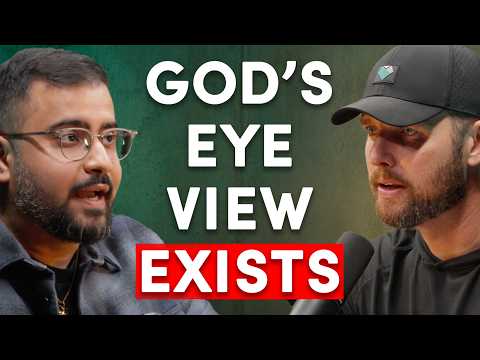
YouTube, 2:30:40, uploaded 15 September 2026. Start 26:42. Channel Richard Ryan. Original with timestamp.
Ryan books him as someone who had bits and atoms in one job: Google Maps, ARCore, then the atlas. Sidhu tells the childhood entry again, this time with the show name. Discovery Kids, Mega Movie Magic, the Independence Day shot of motherships over a city. Eleven years old, the same machine that makes dorky Flash clips can make images you cannot tell from reality. You cannot overlay the world unless you understand it. That becomes AR and VR. That becomes Google.
At Google: the Jump camera, VR 180, ARCore. The same computer vision that turns you into a dancing hot dog sits under the hood of weapon systems. 2019, Maps: photogrammetry, move satellites with code, flood forecasting, visual positioning against Street View. The 3D tiles that later feed God's Eye View come from this stretch. Google VPS, he says, wants a 200 or 300 meter prior before it will place a photo. Other vendors scrape imagery and turn that into a global lookup. Democratization is the point where policy stops reaching.
Minute 26 is the break. RF interacts with bone structure, density, muscle. From that, a fingerprint. The next Wi-Fi package bakes sensing in, the router does the compute, not an ESP32 hack. Xfinity today ships coarse presence detection. Philips Hue, Sidhu citing CTO comments, knows when you enter a room and can locate you inside it. The bright side: home automation without a camera in the house. The cold side: your ISP can document the pattern of life inside your home. Sidhu names Batman, the sonar scene. Ryan says it is worse, and pulls Flock, Ring, re-identification through the devices you carry. TPMS sensors on cars as unique IDs, already logged by agencies.
Then what he wants the open globe for. Synthetic aperture radar through cloud and night, coarse, public, used in academia, landslides, not X-ray through the ground. a16z scout. To parents: put a seven-year-old on Claude or Codex and have them build a game, not only watch. Slop, dead internet, the dragon eats the tail. God's Eye View starts as a Jarvis at home, then every open layer on a 4D globe. Twitter explodes. A Palantir co-founder on TBPN: this only hits the low-end SaaS. Sidhu lets that stand. Agents over WhatsApp, OpenClaw then Hermes, snapshot the Gulf. A country goes dark, the sandwich of poor OSINT stays readable. Aircraft broadcast GPS confidence. Aggregated on H3 cells it becomes a jamming map. Sidhu: an audit trail for reality.
“fingerprint and ID a person just based on how they interact with RF”
“Your Philips Hue lights know when you walk into the room.”
“an audit trail for reality”
Chapters, with timestamps
| Time | What Sidhu says |
|---|---|
| 0:00 | Ryan intro: Maps, ARCore, Palantir Maven, Wi-Fi through walls, the end of the intelligence monopoly. |
| 0:02 | Age eleven, Discovery Kids, Independence Day, 3ds Max, After Effects. Understand, then overlay. |
| 0:10 | Jump camera, VR 180, ARCore. Dual use: Snapchat hot dog and weapon systems. |
| 0:12 | Maps 2019, photogrammetry, satellites, VPS, 3D tiles for the later globe. |
| 0:22 | ESP32, Wi-Fi through walls, VPS democratised, Google's 200-metre prior. |
| 0:26 | CSI fingerprint on the body. Next Wi-Fi standard. Xfinity, Philips Hue, pattern of life. |
| 0:30 | Lifelong re-ID. Devices you carry. TPMS, Flock, Ring. |
| 0:40 | Fourth Amendment, digital nutrition labels, right to bear compute. |
| 0:56 | Geofence warrants. Google moves location history on-device. |
| 1:18 | Synthetic aperture radar: through cloud, at night, landslides, public data. |
| 1:26 | a16z scout. Dual use into body modification. Policy, not only enthusiasm. |
| 1:38 | To parents: a seven-year-old on Claude or Codex, building a game. |
| 1:52 | Slop, dead internet, the dragon eats the tail. Labs fingerprint output. |
| 2:06 | God's Eye View: Jarvis, 4D globe, OSINT layers, Palantir on TBPN. |
| 2:14 | WhatsApp agents (OpenClaw, then Hermes) snapshot the Gulf. A country goes dark. |
| 2:28 | GPS confidence from flights, H3 cells, jamming map. Audit trail for reality. |
His atlas has more than one domain.
maptheworld.ai is the address in the GitHub README. It points at spatialintelligence.ai, the Substack Map the World. halfpixel.ai is a waitlist with one line: Real World Spatial Intelligence. The globe itself lives on GitHub. The bio sits on bilawal.ai. The education feed on YouTube, the VFX feed on Billyfx, the loudspeaker on X.
world.ai is not his site. The domain is listed on Spaceship at $11,111,111, as of 31 August 2026. The market Sidhu maps is called spatial intelligence and world models. The large player there is World Labs, Fei-Fei Li, worldlabs.ai, product Marble, press valuation around $5.4 billion after the February 2026 round. Sidhu lists World Labs as a client. Forbes counted more than $3 billion of VC into world-model startups in the first half of 2026. Sidhu writes the atlas into that market. He does not own it.
MIT client. 14,152 stars, 2,818 forks, as of 31 August 2026, 12:02 UTC. Repo homepage: maptheworld.ai.
Substackspatialintelligence.ai, newsletter and essay atlas. maptheworld.ai points at the same address.
StartupWaitlist, line: Real World Spatial Intelligence. The expensive layer: not live, rewind.
HubOfficial bio, TED, a16z, channel links, 2.1 million audience, 750 million views.
YouTubeEducation channel, 222k subs, 226 uploads. Spatial intelligence, OSINT, world models.
YouTubeEntertainment, VFX, AI clips. About 413k subs. The other channel, not the atlas.
XSince 2010, about 110,000 followers. The globe lands here first, often with video.
RepoMultiplayer AR, MultiSet VPS, Ray-Bans. 269 stars, April 2026.
Launch29 August 2026, top ten. Sidhu: hunted by the inventor of the Twitter hashtag.
Market, not himNot Sidhu's site. Domain for sale, $11,111,111, Spaceship, as of 31 August 2026. The market is world models, the big player World Labs.
226 videos on @bilawalsidhu. The newest is Voice Mode, 29 August.
Snapshot 31 August 2026. The live feed at the top replaces itself once the public Atom feed answers.
Channel @bilawalsidhu, uploads playlist, newest first. 86 long-form, 140 shorts. Date where the Atom feed or a second source carries it. Otherwise the channel position. Billyfx is the second channel, VFX, not this atlas.
Long-form
Shorts
What Sidhu is publishing sits here in one queue.
Substack first, because the essays that carry the videos live there. GitHub numbers next to it, because the globe is a repo, not a blog. The cards below are the 31 August 2026 snapshot. The live endpoint /magazin/assets/sidhu-live.json pulls Atom, RSS and the GitHub API, refreshed on the server every 15 minutes.
GitHub snapshot: 14,152 stars · 2,818 forks · last push 2026-08-28
No full embed. The links with timestamps are the point.
X does not give us a public feed without a key. So this list is baked: originals, no replies, newest first, as of 31 August 2026, noon UTC. Click opens the post on his account. The open-source post of 24 August, 22:08 UTC, carried 183,000 views. The trending post of 28 August, 05:00 UTC, the number-one line.
2,818 forks in a week is not a fan club. It is a stack.
Sidhu, 28 August, 05:00 UTC: number one on GitHub Trending, people want to talk to the planet. A day later, Product Hunt top ten. Open issues sit at 122, including PRs that pull the client in directions the README invited: own layers, own voice, own keys.
26 August 2026: clone, 2,601 tests green, then their own globe from adsb.lol, CelesTrak, USGS, NASA GIBS. Zero dollars, no account. Report.
Gh0st-mods/Gods-Eye-Ghost-Edition: a rebuild that keeps the default path keyless. Credit to Sidhu in the README. Parent MIT.
jazzjabu1939/gods-eye-view-teaching: student-facing fork, Virtual Kyoto. The globe as a seminar room.
asabino2/gods_eye_view_pinokio: a launcher so someone without a Node ritual can lift the client.
Open PRs: RainViewer, OpenSeaMap/OpenSnowMap, Rayhunter (EFF), radio into voice. Layers Sidhu did not ship.
PR 51: the 28 tools over OpenAI, OpenRouter or local Ollama. Voice with no single vendor.
PR 123: when Google photoreal tiles return 403 in Europe, Cesium ion as a second path. The planet under the mesh is the hard dependency.
Fork with world camera packs. Exactly the city-pack lane CONTRIBUTING.md names as the first lever.
McGrinsey is building on it. John's 31 August post in chapter 06 names the layer: World Browser.
Clone the repo. Plug in your source. Build your globe.
What remains of Bilawal Sidhu when the views drop: a public base for maps that used to look like command. Not Palantir. A client you can hang OpenSky or your own net on. The thesis above is the invitation, as of 31 August with a name: World Browser. The hell in the middle is the brake. Both belong in the same fork. Clone the repo. Plug in your source. Build on top of the world.
Method: Who the Heaven. German sister: Wer zum Himmel ist Bilawal Sidhu. Code: gods-eye-view.
| Claim | Basket | Source |
|---|---|---|
| Six years at Google, 2017 to March 2023, Immersive View, Geospatial API, YouTube VR | Fact | LinkedIn bio, TED speaker page, bilawal.ai. "Co-founded Immersive View" at yespress: we leave co-founder as self-attribution. |
| TED talk August 2023, curator from December 2023, a16z scout from February 2024 | Fact | ted.com, LinkedIn dates via Knowndex/Stackforce. |
| WorldView in three days, February 2026 | Self-disclosure | YouTube rXvU7bPJ8n4, Substack 4 March 2026. No independent commit log of those three days. |
| Palantir co-founder: missing proprietary fusion | Second-hand quote | Sidhu in video and Substack, unnamed. AGIHunt/Tencent: Joe Lonsdale, TBPN. TBPN original not checked by us. |
| Iran reconstruction from OSINT, March 2026 | Self-disclosure plus video | spatialintelligence.ai, YouTube 0p8o7AeHDzg. Satellite list is Sidhu's assignment, not operator confirmation. |
| Open source 24/25 August 2026, MIT | Fact | GitHub LICENSE, Sidhu Substack 25 August, Firmatic 26 August (24 August as put date). |
| 14,152 stars, 2,818 forks | Snapshot | GitHub API, 31 August 2026, 12:02 UTC. The number moves. |
| World Browser / Globes Are Eating The World | Reading / hypothesis | John McGrinsey, X 31 August 2026, 09:42 UTC, post 2094360200954163564. Our naming of the milestone, not Sidhu's. |
| world.ai belongs to Sidhu | False / disproved | world.ai is a for-sale page, $11,111,111, Spaceship, 31 August 2026. Sidhu's domain is maptheworld.ai → spatialintelligence.ai. |
| Product Hunt top ten, GitHub Trending number 1 | Self-disclosure plus pages | Sidhu on X, 28 and 29 August 2026. Product Hunt URL 200. Trending rank not independently archived. |
| "People are not a query type here." | Quote | README, Responsible & Open. |
| Plugging in your own sources is the point | Fact in the repo, thesis in the valuation | README Keys/Costs: every layer is a pattern you can point at your own data sources. |
| This globe is a civilization-level map | Reading / hypothesis | Ours. Supported by the Keyhole/Google Earth documentary and the GEV repo, not measured. |
| EarthViewer $800/year, 2003 | Sidhu's documentary | YouTube lhMlFl_NR-g, Sci-fi Spy Tech chapter. No second source laid in this piece. |
| Ryan conversation, 15 September 2026, 2:30:40, Yivliok2FAE | Fact | YouTube, channel Richard Ryan, upload date 2026-09-15. 9,134 views on 17 September 2026. |
| Wi-Fi CSI can fingerprint people from bone/muscle, next standard bakes sensing in | Self-disclosure | Sidhu on Ryan, minute 26. |
| Philips Hue locates you in the room | Self-disclosure | Sidhu, minute 26, citing CTO comments. |
| WhatsApp agents (OpenClaw, then Hermes) snapshot the Gulf | Self-disclosure | Sidhu on Ryan, from 2:14. OpenClaw, then Hermes. |
- GitHub, gods-eye-viewMIT client, layers, licenses, README, 14,152 stars.https://github.com/bilawalsidhu/gods-eye-view
- DATA_SOURCES.mdOpenSky, Google tiles, AIS, FIRMS, TeleGeography NonCommercial.https://github.com/bilawalsidhu/gods-eye-view/blob/main/DATA_SOURCES.md
- I Open Sourced God's Eye ViewSubstack, 25 August 2026.https://www.spatialintelligence.ai/p/i-open-sourced-gods-eye-view
- The Intelligence Monopoly Is OverIran, 4 March 2026.https://www.spatialintelligence.ai/p/the-intelligence-monopoly-is-over
- YouTube, Vibe Coded PalantirrXvU7bPJ8n4, February 2026, co-founder reply.https://www.youtube.com/watch?v=rXvU7bPJ8n4
- TED Speaker / TalkAugust 2023. Cover photo: TED speaker portrait.https://www.ted.com/speakers/bilawal_sidhu
- Firmatic, 26 August 2026Independent clone test, tests, OpenSky count.https://firmatic.nl/en/blog/gods-eye-view-open-source/
- Jamji, World BrowserX, 31 August 2026, 09:42 UTC. Milestone post to Sidhu.https://x.com/jamji_jamaramji/status/2094360200954163564
- YouTube @bilawalsidhu226 uploads, Atom feed, as of 31 August 2026.https://www.youtube.com/@bilawalsidhu
- Product Hunt, God's Eye ViewLaunch page, 29 August 2026.https://www.producthunt.com/products/god-s-eye-view
- Google Earth documentarySidhu, 7 July 2025, Keyhole/$800.https://www.youtube.com/watch?v=lhMlFl_NR-g
- Richard Ryan, Walls Can't Hide YouYouTube Yivliok2FAE, 15 September 2026, 2:30:40. Start 26:42.https://www.youtube.com/watch?v=Yivliok2FAE&t=1602s
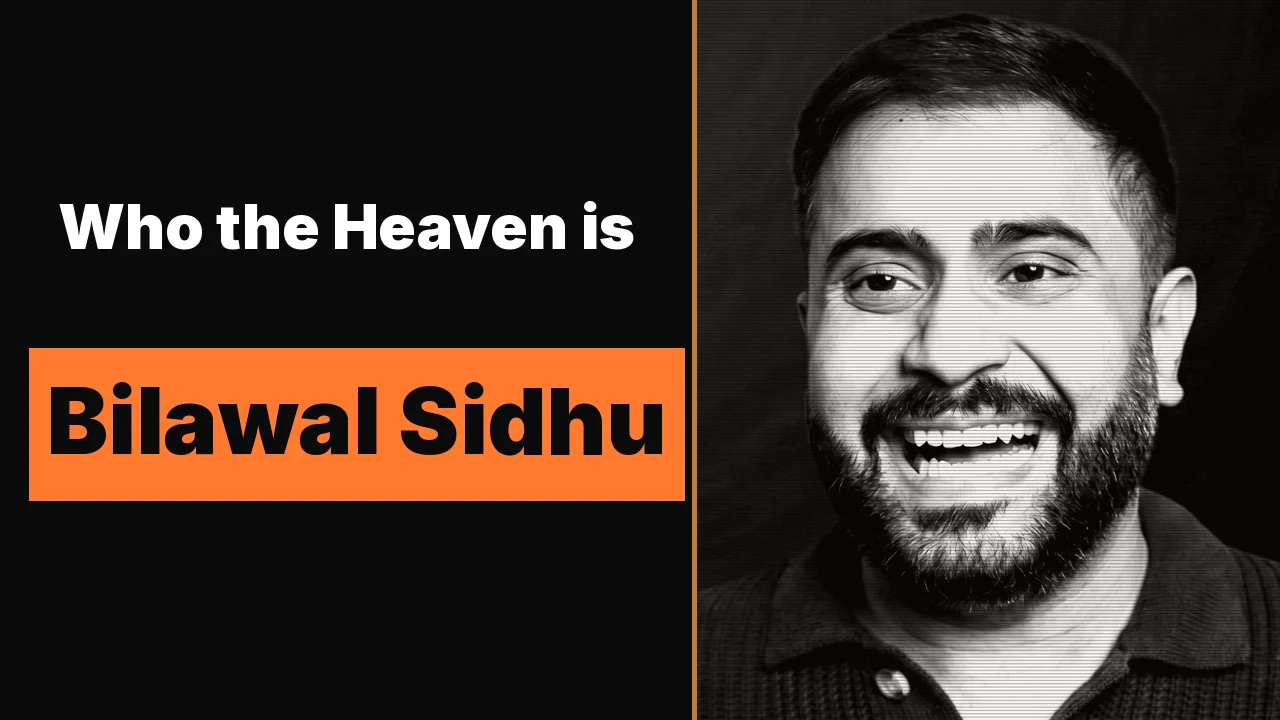
Research as of 17 September 2026. McGrinsey writing skill, Who the Heaven method. Portrait: TED speaker photo, edited, scanlines. YouTube catalogue and X list are snapshots, GitHub figures have a live endpoint. Ryan conversation 15 September 2026.